
Category: Uncategorized

  • Muck Spreading and Dogs: Why Does My Dog Smell Like a Medieval Battlefield?

    Muck Spreading and Dogs: Why Does My Dog Smell Like a Medieval Battlefield?

    This is a reworked version of a blog from my old Swiss Cottage website, but it feels particularly important to bring it back now.

    Dogs watching on as the Muck Spreader and the farmer work hard in their fields.
    Dogs watching and smelling, the muck spreader | Image Rights The Swiss Cottage, Pickering

    I have recently heard a growing murmur within UK farming communities that some farmers are becoming apprehensive about spreading muck because of the complaints and negativity they receive from members of the public.

    Nobody would pretend that muck spreading smells like a bed of roses. I can’t imagine the farm owners are yumming up the scent as they work on the fields either. Yet behind that unmistakable countryside aroma is a traditional, valuable and environmentally useful farming practice. Farmers are not doing it carelessly or simply to inconvenience their neighbours. They are returning nutrients to the land, nourishing the soil and preparing it for the growth to come – and often now, with fewer chemicals, if any being added.

    So, while this article looks at the rather comical consequences for those of us who walk dogs near freshly spread fields, I also want it to celebrate the farmers doing an important job, and trying to keep us all fed in society. To me it smells of nature, new growth and good times ahead.

    Our dogs, meanwhile, appear to interpret it as an invitation.

    If your dog has ever come home smelling like old armour, wet moss and questionable life choices, this one’s for you.

    Anyone who regularly walks dogs near farmland will recognise the danger signs. You are enjoying a perfectly pleasant walk when your dog suddenly stops, sniffs the air and develops a determined look.

    Before you can intervene, one shoulder drops towards the ground and the rolling begins.

    By the time you reach them, the damage is done. Your previously respectable dog now smells as though they have spent the afternoon roaming a particularly damp medieval battlefield.

    If your dog has ever come home smelling like old armour, wet moss and questionable life choices, this one’s for you.

    Why do farmers spread muck?

    Muck spreaders working hard on the fields to fertilise the soil for the coming crops. The importance of adding nutrients back into the soil.

    Before we blame the farmers for ruining our peaceful walk—or forcing us to drive home with every car window wide open—it is worth remembering that they are doing it with entirely good intentions.

    Farmyard manure and slurry are valuable resources. They return nutrients from livestock farming to the land, where they help grass and crops grow. Rather than treating manure simply as waste, farmers can put it back into the natural growing cycle.

    Used responsibly and at the right time, manure can supply important nutrients, add organic matter and help improve the structure of the soil. This can encourage healthy soil life, improve the soil’s ability to hold water and support productive farmland for the future.

    Manufactured fertilisers can deliver particular nutrients quickly and precisely, so they have an important role in modern farming. However, they do not generally add the same organic matter to the soil. Making greater use of manure also recycles something already produced on the farm and can reduce the amount of manufactured fertiliser that needs to be bought and used.

    It is not simply a case of one being good and the other bad. Farmers must carefully balance what their soil and crops need, while considering the weather and protecting nearby rivers and streams. Muck spreading is part of that thoughtful management of the land.

    Beautiful fields of a farm ready for sowing new crops. A fox running off into the distance.
    A fox running across farm fields waiting to be sown | Image Rights The Swiss Cottage, Pickering

    The farmer is certainly not spreading it to upset walkers, neighbours or the local dog population. They are feeding the land and preparing it for the next season of growth.

    We might not all enjoy the smell, but to me it smells of nature, new growth and good times ahead. It is one of those unmistakable countryside smells that tells us the land is being worked and the seasons are moving forward.

    Unfortunately, to a dog it smells like the finest perfume money cannot buy.

    Why are dogs so attracted to it?

    No one can ask a dog for a definitive explanation, but there are several theories.

    One is that the behaviour comes from their wild ancestors. Rolling in strong smells may once have helped dogs disguise their own scent while hunting.

    Another suggestion is that dogs use scent to carry information. By returning to the group wearing the smell of something interesting, they may once have been communicating where they had been and what they had found.

    There is also the considerably simpler explanation: some dogs just enjoy it.

    A smell that makes us recoil may be fascinating to a dog. Their sense of smell is extraordinarily powerful, and what we experience as one strong odour may contain a whole collection of interesting information for them.

    Unfortunately, this does not make sharing the car with them afterwards any more pleasant.

    Managing the muddy chaos

    Freshly spread fields can be irresistible, so prevention is usually easier than dealing with the consequences.

    If you notice that a field has recently been spread, keep your dog close or put them on the lead before they spot their opportunity. A reliable recall and a well-practised “leave it” can help, although even the best-trained dog may temporarily forget everything when confronted with something especially revolting.

    Carrying a towel, water and a packet of wipes in the car is also sensible. They may not remove the smell completely, but they can make the journey home slightly more bearable.

    If your dog has rolled in muck, rinse away as much as possible and wash them with a gentle, dog-friendly shampoo. Collars, harnesses and coats may also need washing—the source of the lingering smell is not always the dog.

    A cocker spaniel having a shower
    A cocker spaniel having a shower | Image Rights The Swiss Cottage, Pickering

    Avoid using heavily perfumed human products, as these can irritate a dog’s skin and may simply create the memorable combination of floral shampoo and farmyard manure.

    What if they eat it?

    Rolling is unpleasant, but eating manure is a different concern.

    Try to distract your dog and move them away rather than shouting or punishing them. If your dog has eaten a significant amount, you do not know exactly what was spread, or they develop vomiting, diarrhoea, unusual tiredness or any other worrying symptoms, contact your vet for advice.

    Wonderfully gross little legends

    Living and walking with dogs means accepting that their idea of a good time does not always match ours.

    We see a working landscape, replenished soil and the promise of new growth.

    They see an irresistible fragrance and the perfect opportunity to roll in it.

    It is natural, useful and an important part of countryside life. It is also disgusting, inconvenient and occasionally quite impressive when worn enthusiastically by a dog.

    But even while standing beside the bath and wondering whether the smell will ever leave the house, we still love our wonderfully gross little legends.

    3 Dogs in towels after having a shower
    It’ll all come out in the wash | Image Rights The Swiss Cottage, Pickering

    #farming #dogs #sometimesitstinks

  • A Magical Harry Potter Adventure from Pickering

    A Magical Harry Potter Adventure from Pickering

    Railway Bridge, Pickering, NYMR

    Staying in Pickering puts you right in the heart of some of Yorkshire’s most magical locations — including a few with direct connections to the world of Harry Potter. While the wizarding world might be fictional, the stunning landscapes and historic settings that brought it to life on screen are very real, and several are just a short journey from our charming Northern market town. Keep on reading for an insight into the Yorkshire World of Wizards!

    North Yorkshire Moors Railway: A Journey to Hogsmeade

    One of the best ways to begin your Harry Potter adventure is by stepping aboard the North Yorkshire Moors Railway (NYMR), which runs right from Pickering. This heritage steam railway winds through the breathtaking North Yorkshire Moors, with its vintage carriages making it easy to imagine you’re travelling to Hogwarts.

    A key stop along the way is Goathland Station, famously used as Hogsmeade Station in Harry Potter and the Philosopher’s Stone. Fans will remember this as the place where the Hogwarts Express arrives, and where Hagrid welcomes the first-year students.

    Even beyond its Harry Potter connection, Goathland is a beautiful village to explore, with scenic walking trails and a classic Yorkshire charm.

    York: A City of Wizarding Wonder

    Less than an hour’s drive from Pickering, York is a must-visit for any Harry Potter enthusiast. Although no scenes from the films were actually shot in York, the city’s medieval streets, Gothic architecture and historic atmosphere make it feel wonderfully at home in the wizarding world.

    The Shambles in York | Image Rights The Swiss Cottage, Pickering

    Arriving in York

    If you’re travelling into York by train, the station makes a suitably grand starting point for a day of exploring. Opened in 1877, its sweeping curved roof and impressive Victorian architecture set the scene beautifully for the historic city beyond.

    York Train Station: Trains leading to Liverpool, Manchester, Leeds, London, Edinburgh, and Scarborough – A Major intersection route, and great Victorian architecture | Image Rights The Swiss Cottage, Pickering

    From here, it’s an easy walk into the centre towards the medieval streets of The Shambles and York Minster, where the crooked buildings, narrow passageways and Gothic architecture provide plenty of atmosphere for Harry Potter fans — even though the films themselves were not actually shot in York.

    Also nearby is the National Railway Museum, which is well worth a visit if trains are part of the magic for you.

    The Shambles: York City

    Not too far by foot from York Station is The Shambles — a stunning medieval street, with crooked timber-framed buildings and narrow alleyways. It is often compared to Diagon Alley, and you can easily imagine yourself wandering through a Northern version of the wizarding world here.

    Many of its shops have embraced the magical theme, offering wands, robes and even Butterbeer for visitors looking to bring a little wizardry into their day.

    The Shambles date back to at least the 14th century, with some of the existing buildings constructed in the late 14th and 15th centuries. The street itself is even older and was mentioned in the Domesday Book of 1086, making it one of the best-preserved medieval streets in Europe.

    Originally home to butchers’ shops, the overhanging timber-framed buildings were designed to provide shade and shelter for the meat stalls below.

    York Minster

    York Minster is another breathtaking sight, with its towering Gothic structure certainly grand enough to feel at home in the world of Hogwarts.

    If you’re in the mood for something a little spookier, a visit to Treasurer’s House — said to be one of the most haunted buildings in England — might just give you the chills.

    Malham Cove: A Dramatic Filming Location

    For those willing to venture a little further, Malham Cove in the Yorkshire Dales is well worth the trip.

    This dramatic limestone formation was used as a filming location in Harry Potter and the Deathly Hallows: Part 1, where Harry and Hermione set up camp while on the run.

    Even without its Harry Potter connection, Malham Cove is a spectacular place to explore, with panoramic views from the top and a rugged landscape that feels almost otherworldly.

    Pickering: The Perfect Base for a Magical Getaway

    After a day of exploring Yorkshire’s most enchanting sights, Pickering offers the perfect place to relax and unwind.

    With its own historic streets, independent shops and cosy pubs, it has a charm of its own. Though you won’t find Ollivanders or The Leaky Cauldron here, you can still easily throw yourself into the world of literature and make-believe.

    Whether you’re hopping on the steam train to Hogsmeade, wandering the wizard-like streets of York or venturing into the dramatic landscapes of the Dales, staying in Pickering makes it easy to step into the magic of Harry Potter — no Floo Powder required!

    #HarryPotter #Pickering #YorkshireMagic #NorthYorkMoors #GoathlandStation #ShamblesYork #MalhamCove

  • A Thank You to Two Much-Loved Yorkshire Coast Places

    A Thank You to Two Much-Loved Yorkshire Coast Places

    We were genuinely sad to hear that the National Trust is to close the cafés and visitor facilities at Ravenscar and the Old Coastguard Station at Robin Hood’s Bay as of September 6th (being their last days of operation).

    These are two places that have always felt like much more than somewhere to stop for a coffee. They have been gateways into one of the most beautiful and fascinating stretches of coastline in Yorkshire — places where you can pause, learn about the landscape and its history, and then head out on foot to experience it for yourself.  We have loved visiting both over the years, and our growing children have been able to access a huge amount of learning through all ages in the two small, but well put together establishments.

    If you have the time coming up before September 7th 2025, maybe it’s time to put on the hiking shoes, grab your binoculars and a water bottle, and head out to the coast of North Yorkshire. The walks and the access obviously wont go away, but these two lovely information centres and cafés, with their knowledgable staff soon will be. 

    I’ll share some of the fascinating things I’ve learnt over the years from these two places (and from growing up nearby) at the end of the blog. 

    Walking the coast from Robin Hood’s Bay – (distance: roughly 5km) depending on how much time you spend wandering the higgledy piggledy streets and tunnel of the bay.

    One of our favourite walks is along the beach from Robin Hood’s Bay to Boggle Hole, and returning back over the cliff tops. To be very aware, the entire Yorkshire coastline is eroding over time – hence so many wonderful fossils to be found, but a key warning to heed: 

    • stay back from the base of the cliff. Heavy clay cliffs falling will do you some serious damage 
    • stay away from the edges and remain on the paths when walking the tops. It’s a long was to fall

    There is something particularly special about seeing this coastline from different perspectives. Down on the beach, you can look up at the enormous cliffs above you and really appreciate their scale and layers. The information provided along the route helps explain the different rocks and formations that make up the cliffs, turning what might otherwise simply look like beautiful scenery into a fascinating geological story.

    Then, climbing back up from Boggle Hole and walking along the cliff tops following more of the Cleveland Way, the view changes completely. You are suddenly looking out over the sea and back towards the coastline you have just walked beneath. With Robin Hoods bay in the near distance, you can imagine exactly why the town is infamous for smugglers bringing in illegal contraband to the UK. Instead of sheep up on the hillside, now a fabulous vineyard sits proudly above the town.

    It is exactly the sort of experience that makes these information centres worth protecting — beautiful, but also full of things to discover.

    Robin Hoods Bay to Boggle Hole via beach, and back along the clifftop

    Walking Ravenscar to Boggle Hole – (distance: just under 10km)

    Another favourite is the walk from Ravenscar along the cliffs towards Boggle Hole, returning up a steep climb from Stoup Beck to the old Cinder Track.

    This summer, we were thrilled by the number of people we saw enjoying Ravenscar. In our eyes, it was a really encouraging number of visitors, and it was wonderful to see so many people discovering this remarkable part of the coast.

    Walking towards Boggle Hole, the landscape constantly changes. And then there are the seals! From high on the cliffs, you can hear them below and, with a good view, watch them gathered along the shoreline and rocks. There is something quite magical about standing high above the sea, hearing the seals calling from far below and watching them in their natural environment. The sound is wild!

    Unfortunately you can’t hear them on seals on the video, but you can hear us talking about them ;0)

    This walk also takes you through some fascinating reminders of the area’s industrial and social history. Eventually, the route brings you down towards the steep climb of Stoupe Beck, before turning back towards Ravenscar along the old cinder track.

    That return route is another reminder that this landscape is much more than a pretty view. The old track, the remains and stories of the area’s industrial past, the dramatic cliffs, wildlife and changing geology all sit alongside one another.

    And throughout it all, the National Trust’s information helps connect what you are seeing with the story of the place.

    Ravenscar to Boggle Hole along the clifftop and back via the Cinder Track

    A difficult goodbye

    We were particularly sad, therefore, to hear about the closures.

    At Ravenscar, we had hoped to walk down towards the famous seal colony, but unfortunately the instability of the cliffs means that access is no longer possible at the moment.

    Of course, sometimes conservation means accepting that we cannot access every part of a landscape. Protecting the cliffs and the wildlife has to come first.

    And that is perhaps why we want to say thank you rather than simply say goodbye.

    Thank you to all the staff who have welcomed visitors over the years — for the coffees, cakes, books, information, friendly conversations and countless small moments that have helped people appreciate this coastline.

    And thank you to the National Trust for the work it continues to do to care for these extraordinary places. The Trust has confirmed that its wider conservation work along the Yorkshire Coast will continue, including caring for walking routes and landscapes, restoring habitats, monitoring wildlife and protecting the area’s natural and historic heritage.

    We hope that whatever happens to these particular buildings and facilities, the spirit of welcome, discovery and conservation they have provided will continue.

    For us, Ravenscar, Robin Hood’s Bay and the paths between them will remain places of wonderful memories, and more in the making — of long walks, spectacular views, seals calling from below, fascinating geology and the feeling of being part of a much bigger landscape.

    Thank you to everyone who has helped keep these beautiful places alive. We are very grateful that we have had the opportunity to enjoy them.

    History Along the Ravenscar to Boggle Hole Walk

    As I mentioned before, one of the things I love about the walk between Ravenscar and Boggle Hole is that the scenery comes with rather a lot of history attached. I therefore think it’s important to share some of those points here. If you walk out along the coast and return on the Cinder Track, you pass through the remains of old industries, abandoned railway infrastructure and, perhaps best of all, a seaside resort that never actually became a seaside resort.

    Ravenscar – the town that never was

    Ravenscar has one of those odd stories that makes you look at the landscape rather differently once you know it. It’s not just a tiny village perched on a cliff, with a majestic old hotel watching over the seal colony.

    Until the late nineteenth century the little settlement here was generally known as Peak. Then, in the 1890s, developers came up with the ambitious idea of creating a brand-new seaside resort to rival Scarborough. The area was renamed Ravenscar, streets were planned, roads and drains were laid out and plots of land were offered for sale.

    There was, however, one fairly major flaw in the plan – which really seems so obvious, it makes it more remarkable that anyone would have even conceived this idea of a “seaside town” in the first place. Ravenscar sits high on the cliffs, around 600 feet above the sea, and getting down to anything resembling a beach involves rather more effort than the average Victorian holidaymaker probably had in mind. Those little changing wagons on wheels wouldn’t cut the mustard to get the ladies of leisure down to the waterfront.

    Lo and behold, the grand resort never materialised.

    Only a scattering of houses was ever built, leaving behind the slightly surreal layout you can still see today: roads, junctions and empty spaces where whole streets of villas and hotels were supposed to stand. Walking through Ravenscar is therefore a little like wandering around the skeleton of a town that exists mostly on an old developer’s plan.

    Peak Alum Works

    Heading from Ravenscar towards Boggle Hole along the coastal path brings you close to the remains of the Peak Alum Works, one of the most important historical sites on this stretch of coast.

    Alum was once an essential part of the cloth-making industry, used to help dyes bind to fabric. The process of making it was enormous, dirty and labour intensive. Shale was quarried from the cliffs, piled up and burned slowly for months before being processed to extract the alum.

    The remains scattered around the hillside include old industrial buildings, workers’ cottages, a lime kiln and traces of an inclined railway that once moved materials between the cliff top and the shore.

    It is also worth looking at the landscape itself. Some of the huge hollows and strangely shaped slopes around Ravenscar aren’t purely natural: centuries of quarrying and industry have quite literally reshaped the coast.

    A much older Ravenscar

    Long before Victorian developers or alum workers arrived, Ravenscar was already an important lookout point.

    Roman signal station once stood on the headland here, forming part of a chain of coastal watch stations built during the late Roman period. From this lofty position there was an excellent view across the North Sea and along the Yorkshire coastline.

    There isn’t a great deal for the casual walker to see today, but I rather like knowing that people were standing up here watching the horizon more than 1,500 years ago.

    Boggle Hole and Bay Mill

    At the bottom of the steep wooded valley is Boggle Hole, whose name sounds as though it belongs in a children’s story.

    boggle was a mischievous goblin or spirit in northern folklore, supposedly the sort of creature that might lurk in caves and lonely places. Given the dark little caves, wooded ravine and secluded beach here, it isn’t difficult to understand how the name stuck. There’s also an old cave on the beach at the corner of Boggle Hole, where the local Boggle is rumoured to live still. Again, don’t go too close to the cliffs. They are crumbling.

    The building now used as the Boggle Hole Youth Hostel was once Bay Mill, a water-powered corn mill, with records of milling here stretching back to at least the seventeenth century.

    The Cinder Track and the old railway

    Returning towards Ravenscar along the Cinder Track changes the historical theme completely.

    The broad, gently graded trail follows the route of the old Scarborough to Whitby railway, which opened in 1885 and finally closed in 1965. The line was notoriously difficult to operate because of its steep gradients, sharp curves and exposed coastal position.

    Ravenscar sat at the summit of the route, and trains climbing towards it had a considerable job on their hands.

    Near Boggle Hole you pass the site of Fyling Hall Station, a tiny rural station which once served the surrounding farms and villages. Parts of the old platform can still be spotted if you know what you’re looking for.

    Further towards Ravenscar the track passes through an old alum quarry and areas later associated with brickmaking. A railway siding once served the works here, another reminder that the railway wasn’t built simply for tourists but was an important part of the area’s industrial life.

    Ravenscar Station and the abandoned tunnel

    Back at Ravenscar, the remains of the old railway station sit alongside the Cinder Track. Remember, it was originally opened as Peak, and later changed to Ravenscar – that badly selected location for a fashionable Seaside Resort.

    Just beyond it is another intriguing remnant of the railway: the old Ravenscar tunnel. The original railway passed through the curved tunnel, while today’s Cinder Track diverts around it.

    It feels particularly fitting to finish the walk here.

    In the space of a few miles you’ve passed Roman lookouts, an industry that helped clothe Britain, an old corn mill, stories of boggles and smugglers, a vanished railway and finally the empty streets of an ambitious Victorian seaside town that never quite happened.

    Not bad for a walk with a sea view, and thanks again to the National Trust staff for working here.

  • Autumn in Dalby Forest

    Autumn in Dalby Forest

    A Yorkshire Favourite for All Ages

    If there is one place near Pickering that truly comes alive in autumn, it has to be Dalby Forest.

    As the seasons change and the green canopy transforms into a spectacular mix of gold, orange and bronze, (and of course greens with pine sections too) Dalby becomes one of those places where you naturally want to slow down. The crunch of leaves under your feet, the smell of petrichor, the woodland sounds, the crisp Yorkshire air and the chance to spot wildlife around every corner makes it a wonderful place to spend a day – and return time and time again.

    Having grown up in Yorkshire, Dalby Forest has always been somewhere I’ve loved visiting. But over the years it has become even more special as I’ve watched my own children grow up exploring it too. One of the things I love most about Dalby is that it really does grow with you – there is something different to enjoy at every age and stage and life.

    From The Swiss Cottage, Dalby Forest is an easy drive away and makes a fantastic day out during your stay in Pickering. If you bring bikes, have confident and safe children … more to follow. But it’s also accessible by bike

    A forest with something for everyone

    Dalby Forest covers a huge area of woodland and open countryside on the edge of the North York Moors. It is not just somewhere to have a quick walk – you can easily spend a full day here exploring, playing, cycling, walking, picnicking or simply enjoying the scenery.

    There are numerous car parks throughout the forest, so you don’t always need to start at the main visitor centre. This is worth knowing, as different areas suit different activities.

    The main Visitor Centre at Low Dalby is the best starting point if you want facilities close by, including toilets, cafés, the shop, bike hire and the Grandfather Oak play area. There are also other parking areas around the forest, including Adderstone, Dixon’s Hollow, Seivedale and Low Staindale, which can be useful depending on what you plan to do. (Forestry England)

    My tip: Don’t try to do everything in one visit! Pick an area and enjoy it properly.

    Autumn walks and woodland exploring

    Autumn is probably my favourite time to visit Dalby.

    The colours are incredible, and even a simple woodland walk feels special. Children (and adults!) can’t resist collecting interesting leaves, looking for fungi, climbing over fallen trees and seeing what they can discover.

    There are walking routes to suit all abilities, from gentle strolls to longer hikes. Some trails are more suitable for little legs and pushchairs, while others take you deeper into the forest and across more challenging terrain. (Forestry England)

    A little Yorkshire weather shouldn’t put you off either. Some of my favourite walks have been on slightly damp autumn days when the colours seem even richer. Just bring sensible shoes – muddy boots are part of the experience!

    The Gruffalo Trail – a childhood favourite

    One of the things my children have loved over the years is searching for the Gruffalo and his friends hidden amongst the trees.

    The Gruffalo sculptures are found around the Adderstone area of the forest. Park at Adderstone Field and follow the route towards the play area, where you can hunt for the familiar characters from Julia Donaldson’s much-loved story. (Forestry England)

    It is exactly the kind of activity that makes children forget they are “going for a walk”. Suddenly they are explorers on a mission!

    Younger children especially love spotting each character, and it turns an ordinary woodland stroll into a little adventure.

    Nearby, the Adderstone play area is also a great place to stop, with plenty of open space for running around, playing games, flying a frisbee or simply burning off some energy. (Forestry England)

    Playgrounds and picnic days

    Dalby Forest is brilliant for family days out because you don’t need to spend money to have fun.

    The Grandfather Oak play area, close to the Visitor Centre, is a firm favourite. It has woodland-style play equipment, climbing opportunities, swings, slides and areas designed for imaginative play. There is also a toddler area, making it suitable for younger visitors too. (Forestry England)

    This is another place where I’ve watched my own children grow. What started as climbing, exploring and playing on the smaller equipment became bigger adventures as they got older.

    There are picnic areas throughout the forest, so taking a packed lunch is a lovely option. Find a picnic table, wrap up warm and enjoy lunch surrounded by trees rather than four walls!

    The Visitor Centre area is also handy if you prefer a café stop, with indoor and outdoor seating available. (Forestry England)

    Cycling adventures through the trees

    Cycling is another reason Dalby Forest is so special.

    When my children were small, we hired bikes from the Bike Hub, including a trailer so they could join in before they were ready to cycle independently. As they grew, we progressed to smaller bikes and longer routes.

    That is one of the lovely things about Dalby – it really can become part of your family story.

    Cycling through the forest in autumn is beautiful. The cooler weather makes it comfortable for longer rides, and riding beneath a canopy of autumn leaves is something you remember.

    There are routes for different abilities, from family-friendly trails to more challenging mountain bike routes. (Forestry England)

    Go Ape – adventure as children grow

    For families with children who love adventure, Go Ape is another fantastic Dalby experience.

    We have visited at different ages and stages, and it has been fascinating seeing how their confidence changes over time. What seemed huge and exciting when they were younger becomes a different kind of challenge as they grow.

    It is a brilliant way for children to test themselves, build confidence and see the forest from a completely different viewpoint.

    Parkrun and active adventures

    Dalby Forest is also home to Parkrun, making it a popular Saturday morning destination for runners and walkers.

    It is a lovely atmosphere – a chance to get some fresh air, enjoy the forest and start the weekend feeling energised.

    Of course, you don’t need to be sporty to enjoy Dalby. Some of the best visits are the simple ones: a walk, a picnic, a flask of hot chocolate, collecting leaves or just enjoying being outside.

    A hidden gem nearby – The Bridestones

    If you enjoy something a little different, I highly recommend a visit to The Bridestones.

    This is a more rugged and atmospheric part of the Dalby area, with unusual sandstone rock formations sitting amongst open moorland. The formations have been shaped over thousands of years by weathering from frost, wind and rain. (Forestry England)

    The circular walk starts from Low Staindale car park and includes a steeper section before opening out onto beautiful moorland views. It is a more adventurous walk and not suitable for pushchairs, but it is well worth it for older children, walkers and anyone wanting a quieter side of Dalby. (Forestry England)

    It is also a wonderful picnic spot – imagine sitting amongst the rocks with views across the North York Moors.

    Stargazing in Dalby Forest

    Because Dalby Forest is away from major towns and light pollution, it is also a fantastic place for stargazing.

    The Visitor Centre area is recognised as a Dark Sky Discovery Site, and the forest hosts astronomy events with local astronomical groups. On a clear autumn evening, wrapping up warm and looking up at the stars is a completely different way to experience the forest. (Go Stargazing)

    It is easy to forget how many stars you can see when you are used to town and city lights.

    Our recommendation

    If you are staying at The Swiss Cottage, Dalby Forest is one of the places I always suggest adding to your plans.

    Whether you have toddlers searching for the Gruffalo, older children wanting adventure, cyclists looking for trails, dogs needing a good walk, or simply want to enjoy the beauty of Yorkshire woodland, Dalby really does have something for everyone.

    And my biggest tip?

    Don’t rush. Take a flask, wear your boots, allow more time than you think you need and enjoy the fact that you are surrounded by one of Yorkshire’s most beautiful landscapes.

  • Why The Swiss Cottage Is the Perfect Pickering Base for Your North Yorkshire Escape

    Why The Swiss Cottage Is the Perfect Pickering Base for Your North Yorkshire Escape

    Welcome to The Swiss Cottage

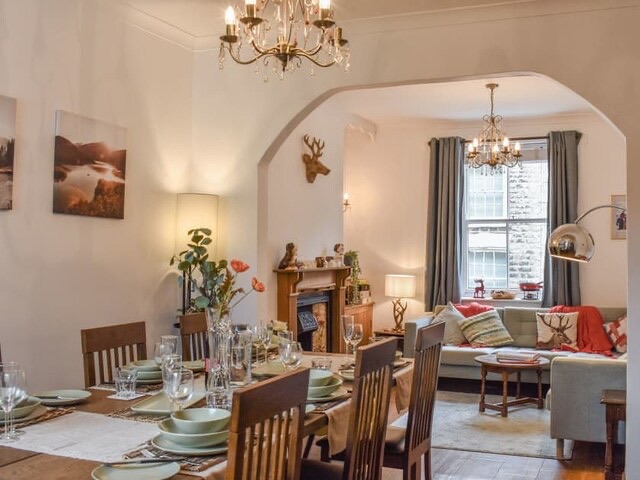
    Tucked into the heart of Pickering, The Swiss Cottage offers a warm, luxurious base for exploring North Yorkshire at your own pace. Whether you are planning a family break, a countryside getaway as a couple, or a dog-friendly stay with plenty of fresh-air adventures, this charming self-catering cottage is designed to help you settle in and feel at home from the moment you arrive.

    With comfort, character, and convenience all in one place, staying here means you can enjoy relaxed mornings, easy day trips, and cosy evenings after discovering the best of the local area. Evenyour car can take a well earned break, as you can walk to all parts of the town easily from our doorstep. With access to local restaurants, cafes, shops, the swimming pool, castle, NYMR and much more in easy walking distance.

    Conservation Group of Homes | The Swiss Cottage, Pickering
    Conservation Group of Homes | The Swiss Cottage, Pickering

    A Stay That Feels Special

    The Swiss Cottage combines boutique style with the practical comforts that make a holiday truly enjoyable. Guests can enjoy the freedom of self-catering accommodation while still experiencing the sense of a premium countryside retreat. It is ideal for travellers who want more space, privacy, and flexibility than a standard hotel stay can offer.

    • Luxury self-catering comfort in central Pickering
    • Ideal for families, couples, and dog owners
    • A welcoming base for exploring the North York Moors and coast
    • Relaxed, home-from-home atmosphere with a premium feel
    • Support from the owner offering advice on visits, local amenities, recommendations, and local knowledge

    Why Pickering Makes a Great Getaway

    Pickering is one of North Yorkshire’s most appealing market towns, offering a mix of local charm, independent places to eat and drink, and easy access to some of the region’s best-loved attractions. From heritage experiences to scenic walking routes, there is plenty to enjoy nearby without needing to travel far.

    For guests staying at The Swiss Cottage, that means you can spend one day exploring the town itself and the next heading out into the wider countryside, coast, or moorland landscapes that make this part of Yorkshire so memorable.

    Pickering's Medieval Church

    Perfect for Families and Dog-Friendly Breaks

    Finding accommodation that feels both stylish and practical can be a challenge, especially when travelling with children or bringing your dog along. The Swiss Cottage is purposed with those real-life needs in mind, making it easier to enjoy a break that feels comfortable, flexible, and genuinely welcoming. You move in to a ready home, and become immediate temporary custodian to a piece of history. We happily direct you to local events and amenities so you can slot immediately into the local culture and environment as though you always have lived there.

    A great holiday base should make every guest feel at ease, whether that means space to unwind after a family day out or easy access to dog-friendly walks and local adventures.

    Plan Your North Yorkshire Stay

    If you are looking for a luxury holiday cottage in Pickering that combines comfort, charm, and an excellent location, The Swiss Cottage is ready to welcome you. It is a wonderful choice for short breaks, longer stays, and memorable escapes in every season.

    Whether your perfect trip includes countryside walks, family time, local food, or simply slowing down in a beautiful setting, The Swiss Cottage gives you the ideal place to begin.